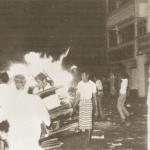

For decades, the cry for Tamil Eelam has not merely been a political slogan; it is a plea for survival. To understand why an independent homeland is the only viable path for the Tamil people, one must look back at the darkest chapter in our modern history: Black July 1983.
The Turning Point: Black July 1983
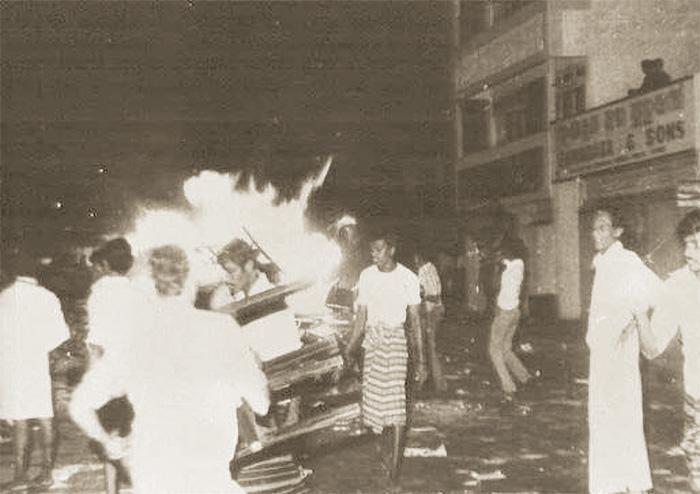
The events of July 1983 changed the Tamil psyche forever. What began as state-sponsored anti-Tamil pogroms resulted in the slaughter of thousands, the destruction of Tamil businesses, and the displacement of hundreds of thousands.
Black July proved that the Sri Lankan state was not a protector of its Tamil citizens but an aggressor. When the state provides voters' lists to mobs to identify Tamil homes, it forfeits its right to govern those people. This "darkest month" made it clear: Without a sovereign state, the Tamil people will always be vulnerable to genocide.
1. The Right to Self-Determination
Every nation has the right to govern itself. The Tamils in the North and East of Sri Lanka possess a unique language, a distinct culture, and a traditional homeland. Under international law, the right to self-determination is fundamental. After decades of peaceful protests (Satyagraha) were met with state violence and broken pacts (such as the Banda-Chelva Pact), independence became the only remaining option for dignity.
2. Systematic Marginalization (Sinhalization)
Since independence in 1948, the Sri Lankan government has implemented policies designed to erase the Tamil identity:
The Sinhala Only Act (1956): Stripping Tamils of equal linguistic rights.
Educational Standardization: Restricting Tamil students' access to universities.
State-Aided Colonization: Systematically moving Sinhalese settlers into traditional Tamil lands to change the demography and weaken Tamil political power.
An independent Tamil Eelam is necessary to stop this "structural genocide" and ensure that our land, language, and future are controlled by our own people.
3. Economic and Cultural Autonomy
The Tamil regions have historically been neglected in terms of infrastructure and economic development by the central government in Colombo. An independent homeland would allow Tamils to:
Manage their own natural resources and ports.
Develop an education system that reflects their heritage.
Build a security apparatus that protects rather than occupies their villages.
4. Accountability and Justice
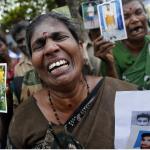
Following the end of the war in 2009, the quest for justice for war crimes and the "disappeared" remains unanswered. The Sri Lankan state cannot investigate itself. Independence is the only way to ensure the safety of survivors and to build a society where "Never Again" is a reality, not just a hope.
Conclusion: The Voice of the Land
Thesakural stands for the "Voice of the Land." That land is the North and East of the island—a place where Tamils have lived for millennia. Black July was the catalyst that proved coexistence under a unitary, ethnocentric state is impossible.
The struggle for Tamil Eelam is a struggle for freedom from fear, freedom from oppression, and the right to exist as a nation.

Leave a comment
Your email address will not be published. Required fields are marked *